 |
| Rain Day Twist-Out |
Happy Wednesday, my blessed naturals!
Yesterday morning, my hair was in a defined twist-out, but when I cam home it was in a poofy one lol. I was thinking about getting extensions to give my hair a rest. Last week, I bought a few packs of 100% Kanekalon synthetic braiding hair to do single braid extensions. I've done extensions on other people's hair, but I've never done it on my own hair. So, I decided to practice doing a couple on my hair. My results are below. I plan to do my whole head when I have some time. I thought about going to a braid shop, but I'm not in the mood to have someone yanking and combing through my hair like they don't have any sense, lol. The last experience was more than enough aggravation. I've noticed that my scalp is a bit more sensitive since I've gone natural. I guess it's because my process of combing and handling my hair is not painful, so my scalp has been in chill mode lol. I will keep you all posted on my protective styling decision!
Do you get your braid extensions done, or do you do them yourself? If you do them yourself, how long does it usually take?
2 Days Left to ENTER to WIN in the 1BlessedNatural and Beauty Is Me Beauty Supply Giveaway!
Yesterday morning, my hair was in a defined twist-out, but when I cam home it was in a poofy one lol. I was thinking about getting extensions to give my hair a rest. Last week, I bought a few packs of 100% Kanekalon synthetic braiding hair to do single braid extensions. I've done extensions on other people's hair, but I've never done it on my own hair. So, I decided to practice doing a couple on my hair. My results are below. I plan to do my whole head when I have some time. I thought about going to a braid shop, but I'm not in the mood to have someone yanking and combing through my hair like they don't have any sense, lol. The last experience was more than enough aggravation. I've noticed that my scalp is a bit more sensitive since I've gone natural. I guess it's because my process of combing and handling my hair is not painful, so my scalp has been in chill mode lol. I will keep you all posted on my protective styling decision!
 |
| Practicing braiding using Kanekalon braiding hair. You can also see the Seborrheic Dermatitis on my scalp. |
Do you get your braid extensions done, or do you do them yourself? If you do them yourself, how long does it usually take?
2 Days Left to ENTER to WIN in the 1BlessedNatural and Beauty Is Me Beauty Supply Giveaway!
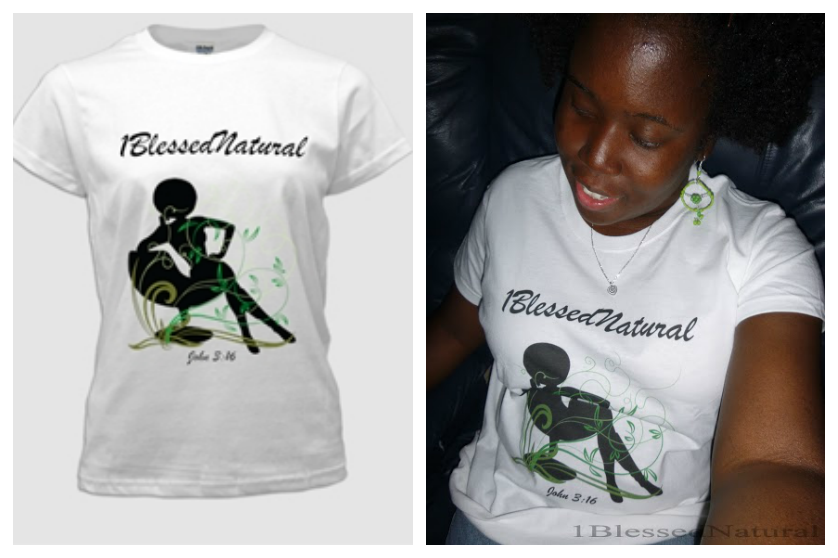 |
| Get your 1BlessedNatural t-shirt! |
